Talent Is Everywhere. Our Responsibility Is to Make Sure Opportunity Is, Too.
When we tell the story of Jesse Owens, we understandably begin with greatness.
We remember the Cleveland-raised athlete who stepped onto the world stage at the 1936 Berlin Olympic Games and won four gold medals. We remember his extraordinary ability, determination and courage.
But when I think about Jesse Owens, I also think about the people who saw his potential before the world did.
I think about the educators and coaches who recognized something extraordinary in a young student and helped him develop it. Before Jesse Owens was an Olympic champion or an international icon, he was a young person in Cleveland's public schools whose story was still being written.
That part of his story has stayed with me as I prepare to join the City Club of Cleveland on September 11 for America 250 Ohio: Preparing the Next Generation for Competition on a Global Stage.
The forum asks an important question: How do we ensure that today's young people have access to the education, coaching, and resources they need to compete on a global stage?
For me, the answer begins with a simple conviction:
Talent is everywhere. Opportunity is not. Our responsibility is to close the distance between the two.
What Potential Is Sitting in Our Classrooms Today?
I spent 32 years in public education, much of that time working in urban school systems. One lesson from those years has never left me: I have never confused a child's circumstances with that child's capacity.
Talent, intelligence, creativity and ambition are not distributed according to ZIP code.
Opportunity, however, can be.
Opportunity can mean access to an outstanding teacher who sees something in a student that others have missed. It can mean advanced coursework, the arts, athletics, STEM experiences, technology, mentorship, college exposure, internships or enrichment. Sometimes, it is simply having an adult with the time, resources and commitment to say to a young person, I see what you can become.
When we look back at Jesse Owens, we have the benefit of knowing how his story ends. But imagine seeing him before anyone knew his name.
How many young people are sitting in classrooms across Cleveland and throughout Ohio today with extraordinary potential in mathematics, science, writing, music, entrepreneurship, athletics, technology, leadership—or in a field that may not even exist yet?
Our job is not to find the next Jesse Owens. Our job is to create an education system capable of recognizing and developing the potential in every child.
Preparing Students for More Than the Next Job
As we consider what it means for Ohio's young people to compete globally, I believe we also need to think bigger than workforce preparation alone.
Of course, students need the knowledge and skills to participate in a changing economy. But we cannot predict every job today's children will hold, or how technology will reshape the jobs we already know.
What we can do is prepare young people to be learners, thinkers, problem-solvers and creators.
That starts with strong academic foundations. Students need to read deeply, understand mathematics and develop meaningful knowledge of the world around them. Those foundations make it possible for them to think critically, communicate effectively, collaborate across differences, distinguish credible information from misinformation, adapt to change and approach new challenges with creativity and curiosity.
It also means preparing students to engage responsibly with technologies such as artificial intelligence. Our young people will enter a world in which AI is simply part of the environment. The question isn't whether they will use it. The question is whether they will know how to use it critically, ethically and productively.
That is why educational opportunity matters so much. If some students learn to use emerging technologies to create, analyze, question and solve problems while others do not receive those same opportunities, we risk creating yet another opportunity gap.
Investing in the People Who Develop Potential
Jesse Owens' story reminds us of something else: Behind extraordinary students, there are very often extraordinary educators.
Teachers do not manufacture a child's talent. They recognize it. They challenge it. They create conditions in which it can grow.
After more than three decades in education, I have seen teachers do this again and again. They notice the student who has stopped raising her hand. They challenge the young person who is capable of more than he realizes. They introduce students to ideas, experiences and possibilities that can change the direction of a life.
If we want innovative, intellectually curious and globally competitive students, then we must invest in the people responsible for helping them become those things.
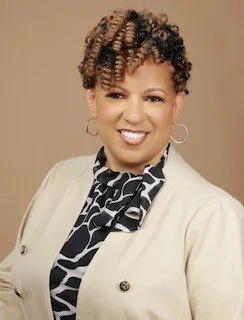
Today, as Executive Director of the Martha Holden Jennings Foundation, I see that responsibility from a different vantage point. Philanthropy can help educators test promising ideas, take responsible risks, create new opportunities for students and bring people together around shared challenges.
But philanthropy cannot, and should not, substitute for a strong public education system.
Ohio's future depends on public schools that have the capacity to recognize and cultivate the potential of every young person they serve. And that requires teachers who have the professional support, resources, opportunities and respect they need to do their best work.
Ohio's Next 250 Years
As our nation marks its 250th anniversary, conversations about America's future naturally invite us to look backward as well as forward.
Jesse Owens gives Ohio an extraordinary story to look back upon. But perhaps his legacy should also challenge us to ask what stories are being written right now.
The next breakthrough scientist may be sitting in an Ohio science classroom.
The next entrepreneur may be discovering an idea through a school project.
The next great artist may be picking up an instrument for the first time.
The next community leader may be finding her voice in a classroom discussion.
And somewhere, an educator may be the first person to recognize what is possible.
We cannot know how any of those stories will end. That is precisely why our responsibility in the present matters so much.
If Ohio intends to compete on a global stage for the next 250 years, we cannot afford to waste human potential. We need educators, families, philanthropy, businesses and community partners working together to make sure opportunity reaches talent—wherever that talent happens to live.
I hope you will join me for this important conversation at the City Club of Cleveland on Friday, September 11, 2026.
Doors open at 11:15 a.m., lunch begins at 11:30 a.m., and the forum begins at noon at the City Club of Cleveland, 1317 Euclid Avenue. The forum will also be available via livestream.
I hope you will be part of the conversation. Visit the website at cityclub.org to register.
Because the question before us is larger than whether Ohio can produce another Jesse Owens.
It is whether we can build an education system and a community around our young people that recognizes the possibility within every child and gives them the opportunity to discover just how far that possibility can take them.